
Care and Feeding
aka Bend Dirt Fest Gravel Race Report

Care and feeding.
That encompasses all that we sought to provide to our children.
(Well, add enjoyment, sure, but security, nourishment, maybe comfort: Those were the priorities, well above fun.)
Care: Shelter. Safety. Affection.
Feeding: Nourishment for the body and the mind and the soul.
Of the two, feeding posed the bigger challenge. We were fortunate to be able to house our kids securely and get them to school and set them up to build relationships and to develop confidence, but getting a toddler to eat (or getting a lesson to sink into the brain of a teenager)? Those challenges didn’t always resolve easily.
Of course literal feeding becomes simpler as your kids age: One day you’re playing “Here’s the airplane, coming in for a landing” (or before that, figuring out how to position your infant to “latch”; try as I might to help, that one fell largely to Karen), and then you blink, and they’re helping themselves to heaping bowls of cereal or several pieces of leftover pizza at 10:00 a.m. on a Saturday morning.
Care lingers, but feeding, of the literal sort, becomes self-managing — unless you’re the parent of a cyclist.
In cycling, “feed” is a verb, yes, but also an adjective (you’re handed bottles in the “feed zone”) and even a noun, as in “She’ll take a feed on lap two.” The term is so commonplace that an endurance sports-nutrition company calls itself The Feed (and advertises incessantly on the Tour de France broadcast).
So when I coached our local high school mountain bike team — including my older two kids, Mack and Catie — I found myself back in Here’s-the-airplane mode: Cyclists, especially adolescent ones, often need to be convinced to consume — and the literal, physical act of delivering the feed poses a challenge.
The first time I stood in the feed zone with parent-volunteers and watched them attempt to hand their kid a bottle from a firm, closed hand, I realized: This isn’t a natural act. For a speeding rider to have a chance at seizing the bottle, the feeder must suspend it, not grasp it. We literally held feeding clinics for those volunteers. I felt like the instructor for a very special kind of parenting class.
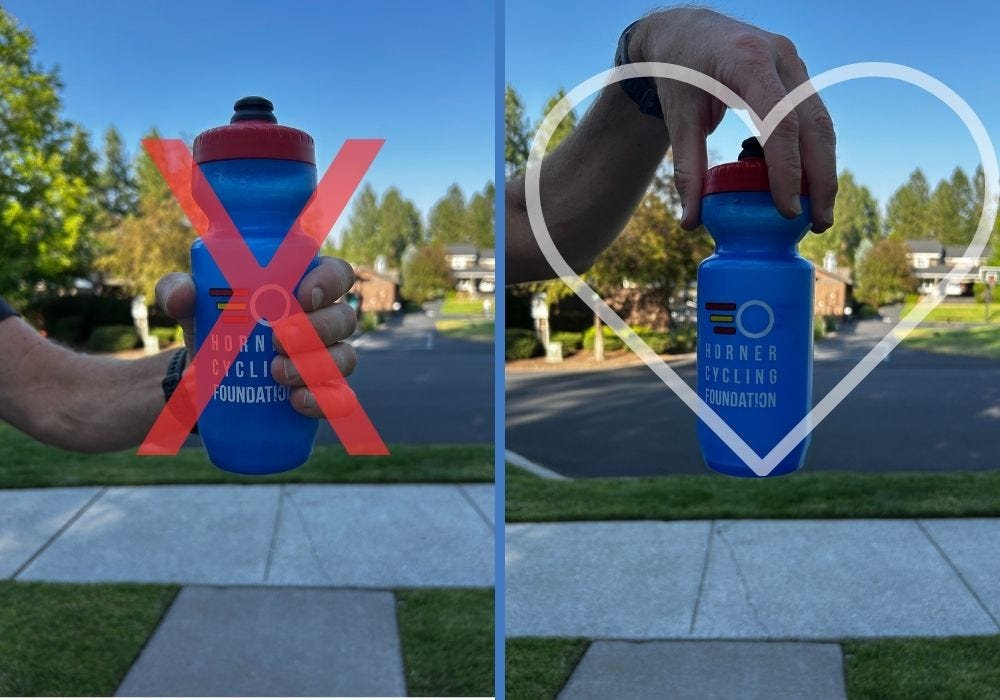
When any of our riders would roll around the turn before the feed zone, I’d shout in support; if it was Mack or Catie, I’d yell so loudly that the other feeders would start:
YESSSS Mack!
And then:
Take this bottle — and take one big drink right now!
Seventeen years old, and I was back to feeding him.
Last weekend I competed in the Bend Dirt Fest gravel race. Far from the low-key affair that “Dirt Fest” connotes, it was a legit bike race, replete with lactate, dust, perspiration and dehydration.
Late in the race I was passed twice in a technical section; I’d counted, and figured I’d thus fallen out of the top ten. Emerging from the trail onto the final, paved, seven-mile stretch, I could see that those two rivals were maybe 150 meters ahead.
Problem was, I was exhausted, and parched — and out of water.
Mack was visiting with his girlfriend; they’d told me that they would ride out to the course with Karen, hoping to cheer me on. Now, as I crested a small rise, inching closer to the two riders, desperate for water, I spied three figures standing in front of bicycles along the side of the road.
You can see what’s coming.
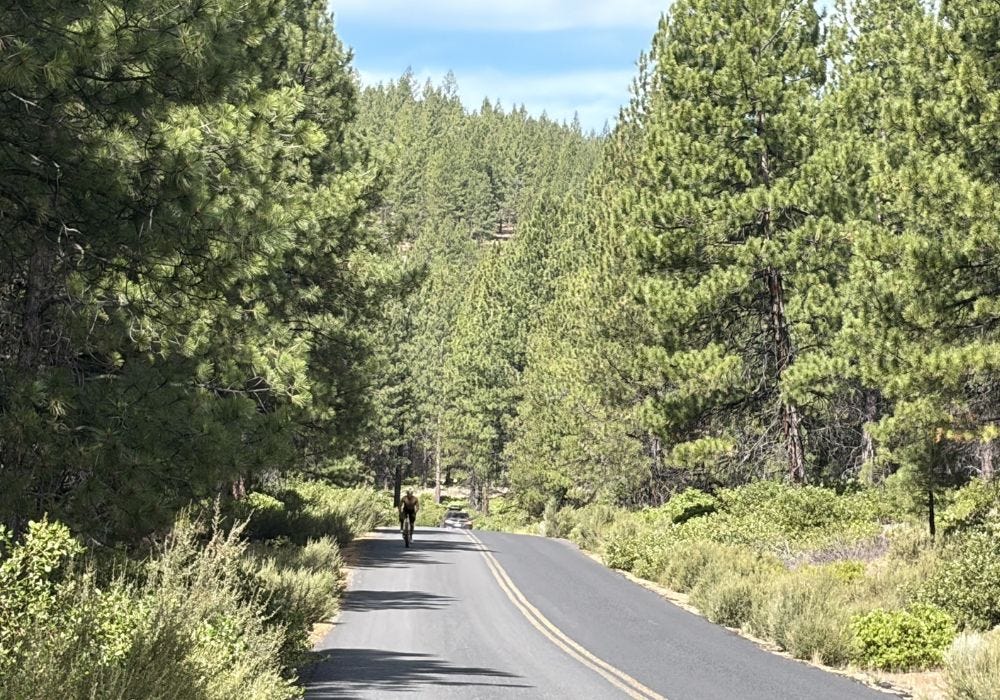
I neared my trio and heard Mack yell: Water? I nodded, but then saw the math materialize: Headed downhill, hammering to catch the duo, I was moving much faster than is typical for a feed zone. This handoff was going to be dicey.
Mack dangled the bottle aloft, shoulder-height for me, fingers and thumb holding its top. Even then, I considered, this could prove painful — could even send me flying.
I extended my arm and in the instant that my hand connected with the bottle, Mack actually let go — and it landed comfortably in my grasp. He’d visualized the math as well, and mustered an absolutely expert feed.
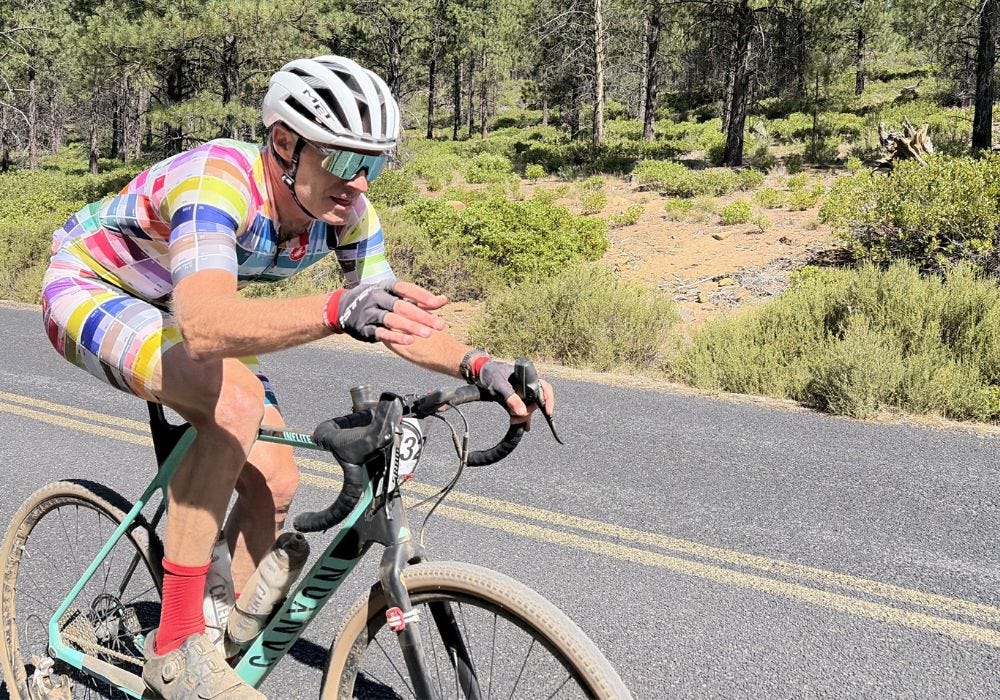
I took my one big drink, emphatically tossed a spent bottle (hoping my supporters would see me do so and collect it), inserted my new one into my cage, and set out to reel in the two riders. I reached them within a few minutes, and then on the first rise we faced together, rode away.
Determined as I’d been to race back into the top ten, I hadn’t considered just what a full-circle moment Mack’s feed had been. That’s not to make too much of my kid, now 26, handing me a water bottle in a bike race. But parenting milestones become much farther between once your kids leave home; they say that when they do, you’ve already spent 90% of your time together.
I’ve thus allowed myself to replay that feed in my mind again and again: My son, having learned to do so from me, dropping what at that moment I most needed, cleanly into my hand. A perfect feed.